In his book Less is More – How Degrowth Will Save The World, Jason takes us through the long and painful history of the removal of people from the land. This is a history that escaped my awareness until now – Jason reminds us that once upon a time (in Europe and Britain), the land was generally not “property” – it was Commons. People could live on the land, grow or raise things on it, and in community with their neighbours barter labour or goods to have their needs met. Once the land was largely privatized in the hands of the elite, there ensued, over hundreds of years, various approaches to engaging the labours of peasants, largely in the service of the landowners. Some approaches better than others. At various times historically, peasants were thrown off the land – one of those times (in the 1600’s) happens to be what prompted some of my ancestors to flee Scotland.
Jason talks about this loss of the Commons as a major underpinning for the industrial revolution (people having been thrown off the land were forced into industry to survive). He says it was no accident. Industry needed workers and they weren’t coming willingly.
Today we have a huge housing crisis in many parts of the Western World for all but the well-to-do.
- Growing income disparities and shrinking ‘Middle Class” jobs means a growing percentage of the population can’t afford to rent on their own, let alone buy housing
- By-laws and standards governing housing and residential building generally limit the number of residential units on a property and the nature of those residential units
- Even in rural areas where there is lots of land, these restrictions apply
Last week I Zoom’d in to a Green Party meeting; they were hosting a presentation on housing for the homeless by a local organization – PATH – Peterborough Action for Tiny Homes. Peterborough has had a growing and visible housing crisis for years. PATH has raised funds and is ready to establish a small tiny home community. But they are thwarted by a city Staff who are inflexible when it comes to existing by-laws and codes – which can’t be interpreted in a way that would make such a development possible.
Also last week I made a delegation to my local Township Mayor and Council to find out their perspective on the affordable housing crisis and to share my thoughts about making wider use of the Rural zoned lands in this municipality for housing.
Our municipality is characterized by a lot of nice mixed forest where the farming prospects are marginal. The pioneers who settled my land in 1836 really drew the short straw on arable land.
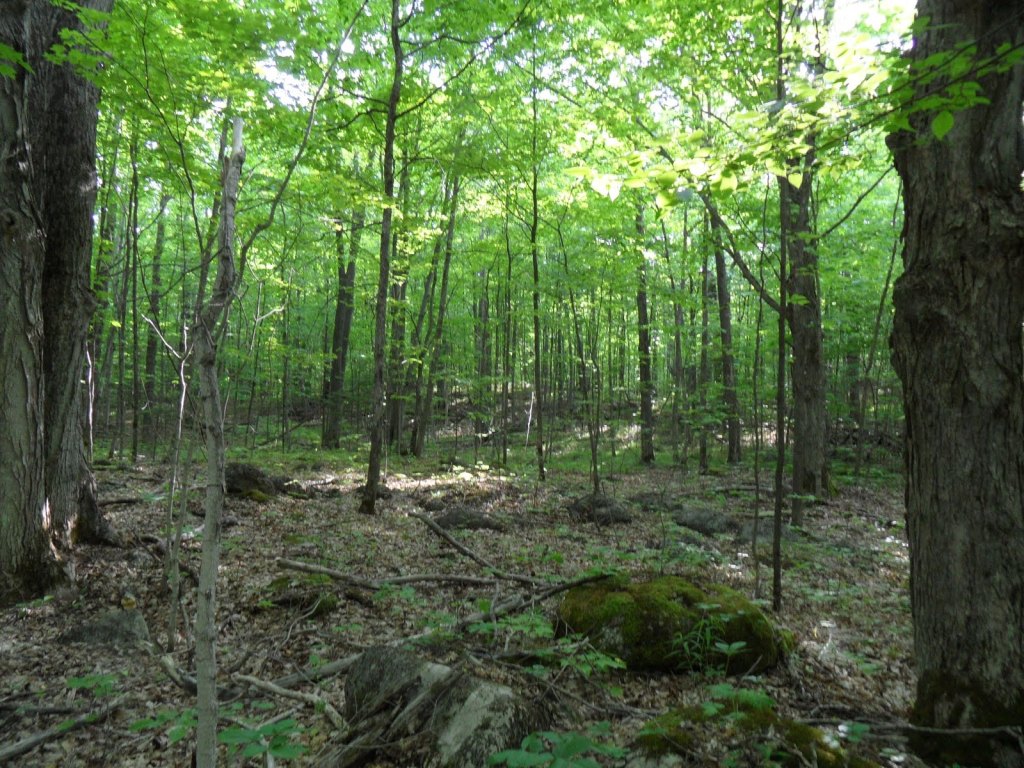
There is a LOT of this land and where it is zoned ‘Rural’ there can be two residential buildings, the second no more than 60% the footprint of the primary. This rule only changed in the last year (prompted by a Provincial Government mandate).
Council shared with me some of the issues they’re seeing – squatters and illegal campers are a growing and pretty recent problem.
I implored Council to get ahead of the curve on this opportunity; look for ways to expand options for more intensive housing developments where people have access to land where they can grow some of their own food.
If we do this proactively, I reasoned, it can add much needed tax base and enterprise to a township that doesn’t have a whole lot of enterprise going on.
I was encouraged to engage with Planning Staff to find out the various hurdles to making such land uses possible.
It was noted that the municipality must operate within guidelines established by the Province, the County, and the Conservation Authority.
Hmm. Work to do.
 A Discourse: Climate Change - What's up with the World?
Leave a comment